Safety
highCulpeper's quince passage treats white hellebore as a poison whose strength could be countered, making toxicity the dominant archive context.
Helleborus niger
Hellebore appears in Hermetikon as an archive-backed plant entry, with references across historical medical, magical, symbolic, and ritual contexts where the source texts support them.
Identity, safety, and search aliases used to connect this herb to the archive.
Historical hellebore identities include toxic plants; treat medicinal use as high risk.
Historical archive citations are not medical advice. Use modern clinical and poison-control sources for ingestion, dosage, pregnancy, and toxicity questions.
Curated archive synthesis of recurring uses, recipes, rituals, and interpretive problems.
Hermetikon's curated reading of Hellebore (Helleborus niger) is built from 3 source-linked archive notes and 1 preparation or ritual-use entry. The strongest recurring contexts are astrology, identity, and safety. Each note below links back to the archive source used for the claim.
Culpeper's quince passage treats white hellebore as a poison whose strength could be countered, making toxicity the dominant archive context.
Hill warns that bought hellebore root may be substituted with green-flowered wild or bastard hellebore, a rough medicine, making identity control central.
Agrippa assigns black hellebore, with mugwort, to the fixed star called the Head of Algol, linking the plant to high-risk stellar magic rather than household use.
Frazer reports a Greek cutting rule for black hellebore: face eastward and curse while cutting it, probably to intensify the bitter medicinal virtue.
§ 2. The Magical Control of Rain
Compact source patterns from the extracted citation set.
1 passage across 1 book; strongest source: The Family Herbal.
Matched as hellebore; high confidence.
5 passages across 5 books; strongest source: Clavis Astrologiae Elimata.
Matched as hellebore; high confidence.
4 passages across 4 books; strongest source: Culpeper's Complete Herbal.
Matched as hellebore; high confidence.
3 passages across 3 books; strongest source: The Golden Bough.
Matched as hellebore; high confidence.
1 passage across 1 book; strongest source: Anatomy of Melancholy.
Matched as hellebore; high confidence.
Representative public passages with the herb mention highlighted and linked to archive source material.

Complete public source inventory, placed after the interpretive reading so the page opens with the most useful synthesis first.
Anatomy of Melancholy
Robert Burton | 1621
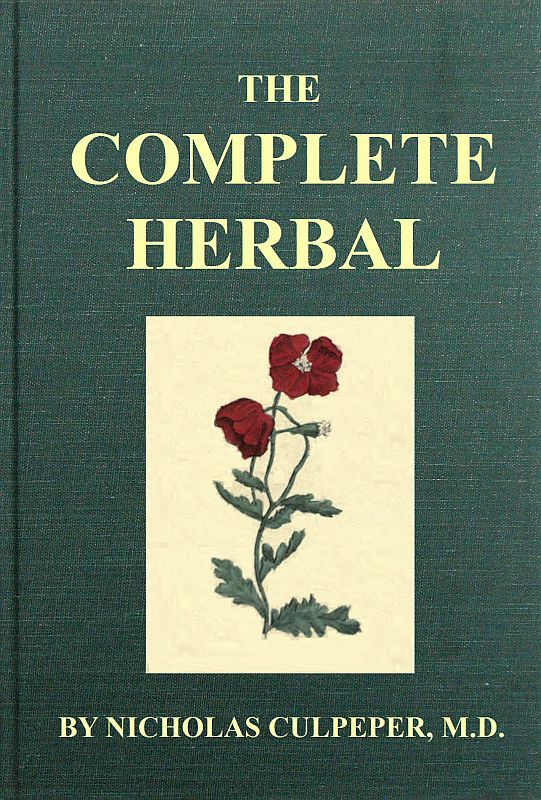
Culpeper's Complete Herbal
Nicholas Culpeper | 1653
King's American Dispensatory
Harvey Wickes Felter | 1854
Three Books of Occult Philosophy
Heinrich Cornelius Agrippa von Nettesheim | 1533
Illustration of the Occult Sciences
Ebenezer Sibly | 1784
Hermetic and Alchemical Writings of Paracelsus
Philippus Aureolus Theophrastus Bombast von Hohenheim (Paracelsus) | 1493
The Magus (Vol 1)
Francis Barrett | 1801
Brewer's Dictionary of Phrase & Fable
E. Cobham Brewer | 1870
Encyclopaedia of Occultism
Lewis Spence | 1920
Domestic Folk-lore
Thomas Firminger Thiselton-Dyer | 1881
Thaumaturgia
Richard Harris Dalton Barham | 1835
The Golden Bough
James George Frazer | 1906

The Discoverie of Witchcraft
Reginald Scot | 1584
Transcendental Magic
Eliphas Levi | 1854
The Influence of the Stars
Rosa Baughan | 1880
Hastings' Encyclopaedia of Religion and Ethics
James Hastings | 1913
The Book of Witches
Unknown Author (Historical Compilation) | 1900

The Nag Hammadi Library
Various Gnostic Authors (Ancient) | 1945
Metamorphoses (Books VIII-XV)
Publius Ovidius Naso (Ovid) | 8
The Phantom World
Augustine Calmet | 1746
Demonologia
J. S. Forsyth | 1827
Manual of Astrology
Raphael (Robert Cross Smith) | 1828
The Family Herbal
John Hill | 1755
The Golden Bough
James George Frazer | 1906
Liber 777
Aleister Crowley | 1909
Clavis Astrologiae Elimata
Henry Coley | 1669