Medicine
highCulpeper uses elder flowers in a distilled water with nightshade for hot agues, inflammations, St. Anthony's fire, and heat-related swellings.
Sambucus nigra
Elder appears in Hermetikon as an archive-backed plant entry, with references across historical medical, magical, symbolic, and ritual contexts where the source texts support them.
Identity, safety, and search aliases used to connect this herb to the archive.
Raw leaves, bark, and unripe berries can be toxic; elderflower and elderberry belong to separate preparation contexts.
Historical archive citations are not medical advice. Use modern clinical and poison-control sources for ingestion, dosage, pregnancy, and toxicity questions.
Curated archive synthesis of recurring uses, recipes, rituals, and interpretive problems.
Hermetikon's curated reading of Elder (Sambucus nigra) is built from 3 source-linked archive notes and 2 preparation or ritual-use entries. The strongest recurring contexts are medicine, preparations, and folk magic. Each note below links back to the archive source used for the claim.
Culpeper uses elder flowers in a distilled water with nightshade for hot agues, inflammations, St. Anthony's fire, and heat-related swellings.
Hill gives a direct oil of elder preparation: elder flowers are boiled in olive oil until crisp and then strained off.
Frazer records elder-flower tea or wine in western Bohemia whose medicinal virtue depends on gathering the flowers on Midsummer Eve.
Chapter VIII. The Magic Flowers of Midsummer Eve.
Hill's oil of elder is made by boiling elder flowers in olive oil until the flowers are crisp, then straining the oil.
Frazer reports western Bohemian elder-flower tea or wine whose virtue depends on the flowers being gathered on Midsummer Eve.
Chapter VIII. The Magic Flowers of Midsummer Eve.
Compact source patterns from the extracted citation set.
6 passages across 6 books; strongest source: A Book of Myths.
Matched as elder; medium confidence.
1 passage across 1 book; strongest source: The Golden Bough.
Matched as elder-flowers; high confidence.
3 passages across 3 books; strongest source: Culpeper's Complete Herbal.
Matched as elder flowers; high confidence.
4 passages across 4 books; strongest source: Anatomy of Melancholy.
Matched as elder; medium confidence.
Representative public passages with the herb mention highlighted and linked to archive source material.
Complete public source inventory, placed after the interpretive reading so the page opens with the most useful synthesis first.
Myths of the Norsemen
Anonymous | 1200
Culpeper's Complete Herbal
Nicholas Culpeper | 1653
Teutonic Mythology (Vol 3)
Viktor Rydberg | 1889
Metamorphoses (Books VIII-XV)
Publius Ovidius Naso (Ovid) | 8
A Book of Myths
Andrew Lang | 1889
Primitive Culture, Vol. 2
Edward Burnett Tylor | 1871
King's American Dispensatory
Harvey Wickes Felter | 1854
Extraordinary Popular Delusions
Charles Mackay | 1841
Modern Mythology
Charles Kingsley | 1873
The Secret Doctrine, Vol. 2: Anthropogenesis
Helena Petrovna Blavatsky | 1888
The Family Herbal
John Hill | 1755
The Golden Bough
James George Frazer | 1913
The Secret Doctrine, Vol. 3
Helena Petrovna Blavatsky | 1897
Mythology of All Races (Vol 11)
Hartley Burr Alexander | 1920
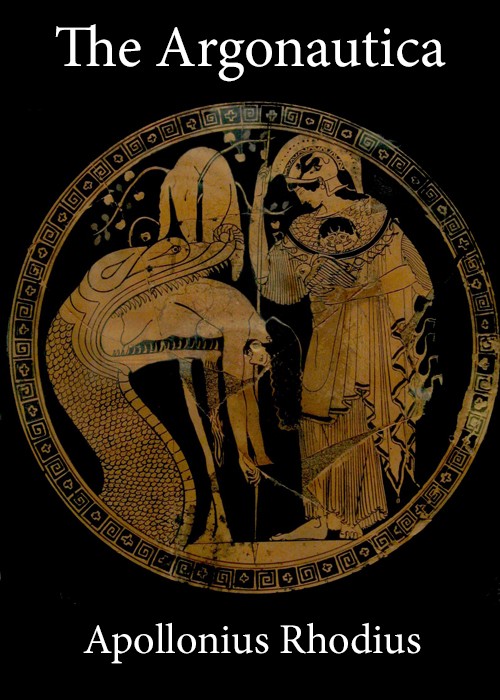
Argonautica
Apollonius Rhodius | 250
Popular Superstitions, and the Truths Contained Therein
Herbert Mayo | 1851
Practical Psychomancy
William Walker Atkinson | 1908

Ritual and Belief
A.W. Buckland | 1891
The Secret Doctrine Index
H. P. Blavatsky | 1897
Superstitions of Witchcraft
Howard Williams | 1865
The Golden Bough
James George Frazer | 1912
Anatomy of Melancholy
Robert Burton | 1621
Tetrabiblos
Claudius Ptolemy | 150
Mysteries of All Nations
James Grant | 1880

Chips from a German Workshop (Vol 1)
F. Max Müller | 1867
Chips from a German Workshop (Vol 5)
F. Max Müller | 1881
Literature of the Ancient Egyptians
E.A. Wallis Budge | 1914
The Evil Eye
Frederick Thomas Elworthy | 1895
Christian Astrology
William Lilly | 1647
The Prophecies
Michel de Nostredame (Nostradamus) | 1555
Hastings' Encyclopaedia of Religion and Ethics
James Hastings | 1917
Hastings' Encyclopaedia of Religion and Ethics
James Hastings | 1918