Ritual
highAgrippa includes camphor in a lunar suffumigation with white poppy, frankincense, and animal materials, so the archive's strongest occult evidence is ritual incense.
Cinnamomum camphora
Camphor appears in Hermetikon as an archive-backed plant entry, with references across historical medical, magical, symbolic, and ritual contexts where the source texts support them.
Identity, safety, and search aliases used to connect this herb to the archive.
Camphor ingestion can be poisonous; topical use also requires caution.
Historical archive citations are not medical advice. Use modern clinical and poison-control sources for ingestion, dosage, pregnancy, and toxicity questions.
Curated archive synthesis of recurring uses, recipes, rituals, and interpretive problems.
Hermetikon's curated reading of Camphor (Cinnamomum camphora) is built from 3 source-linked archive notes and 2 preparation or ritual-use entries. The strongest recurring contexts are ritual uses, folk magic, and symbolism. Each note below links back to the archive source used for the claim.
Agrippa includes camphor in a lunar suffumigation with white poppy, frankincense, and animal materials, so the archive's strongest occult evidence is ritual incense.
Frazer records Sarawak camphor-collecting taboos in which wives' adultery or combing could cause the camphor obtained in the jungle to evaporate.
4. The Magician’s Progress
Liber 777 reads camphor through lunar symbolism, emphasizing its white waxen appearance, clean perfume, disinfectant association, moth use, and lustration idea.
Agrippa's Moon suffumigation combines camphor with white poppy seed, frankincense, a dried frog head, and animal materials.
Pow-Wows gives gum camphor in an alcohol, turpentine, ether, chloroform, laudanum, and olive-oil liniment; this is historical evidence with major safety concerns.
Compact source patterns from the extracted citation set.
3 passages across 3 books; strongest source: Ritual and Belief.
Matched as camphor; high confidence.
1 passage across 1 book; strongest source: The Golden Bough.
Matched as camphor; high confidence.
8 passages across 8 books; strongest source: Anatomy of Melancholy.
Matched as camphor; high confidence.
1 passage across 1 book; strongest source: The Golden Bough.
Matched as camphor; high confidence.
1 passage across 1 book; strongest source: King's American Dispensatory.
Matched as camphor; high confidence.
Representative public passages with the herb mention highlighted and linked to archive source material.
Complete public source inventory, placed after the interpretive reading so the page opens with the most useful synthesis first.
King's American Dispensatory
Harvey Wickes Felter | 1854
Transcendental Magic
Eliphas Levi | 1854
The Golden Bough
James George Frazer | 1906
Encyclopaedia of Occultism
Lewis Spence | 1920
Pow-Wows
John George Hohman | 1820
Hermetic and Alchemical Writings of Paracelsus
Philippus Aureolus Theophrastus Bombast von Hohenheim (Paracelsus) | 1493
Hastings' Encyclopaedia of Religion and Ethics
James Hastings | 1917
The Golden Bough
James George Frazer | 1906
The Golden Bough
James George Frazer | 1890
Hastings' Encyclopaedia of Religion and Ethics
James Hastings | 1916
Liber 777
Aleister Crowley | 1909
Magick in Theory and Practice
Aleister Crowley | 1929
Three Books of Occult Philosophy
Heinrich Cornelius Agrippa von Nettesheim | 1533
Anatomy of Melancholy
Robert Burton | 1621

The Authentic Red Dragon and Black Hen
Anonymous | 1800
Pagan and Christian Creeds
Edward Carpenter | 1920
Hastings' Encyclopaedia of Religion and Ethics
James Hastings | 1913
The Golden Bough
James George Frazer | 1912
The Golden Bough
James George Frazer | 1906

Ritual and Belief
A.W. Buckland | 1891
The Serpent Power
Arthur Avalon (Sir John Woodroffe) | 1919
Isis Unveiled Vol. 1
Helena Petrovna Blavatsky | 1877
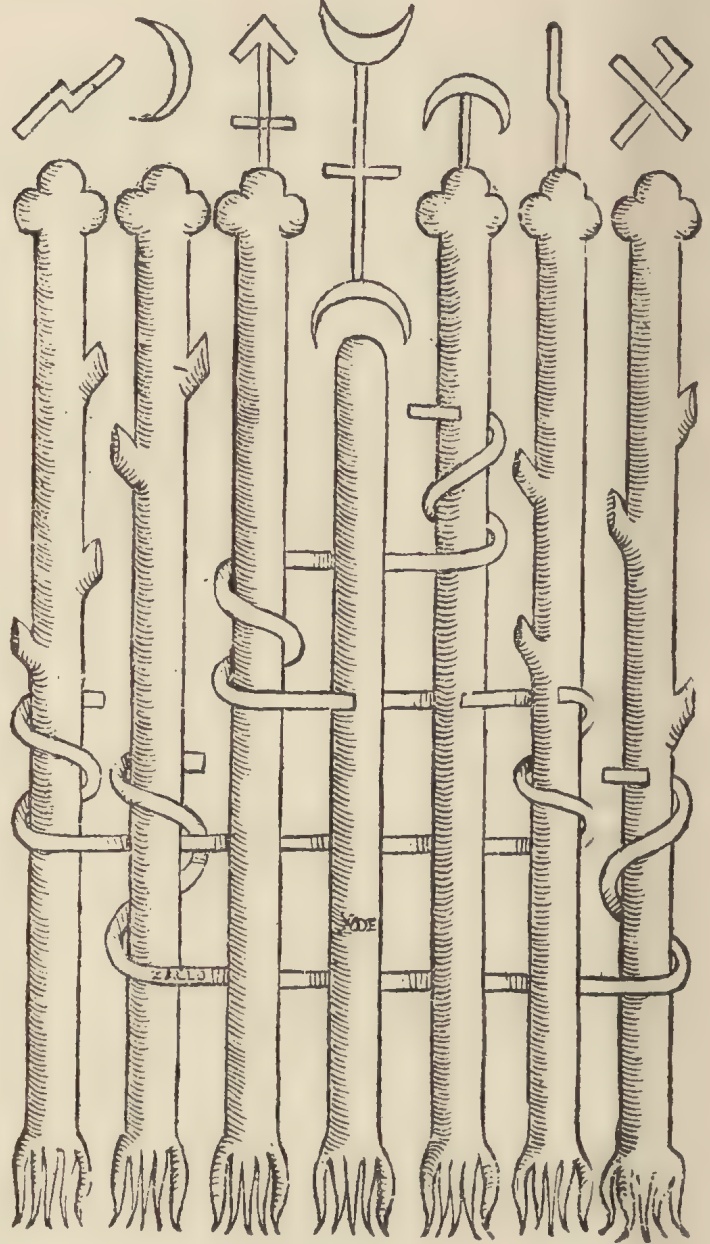
The New Pearl of Great Price
A. E. Waite | 1894
Demonologia
J. S. Forsyth | 1827
Myths and Fables of To-Day
Samuel Adams Drake | 1900
The Evil Eye
Frederick Thomas Elworthy | 1895
Witchcraft, Magic & Alchemy
Grillot de Givry | 1929
Psychological Origin of Religion
James H. Leuba | 1909
Book of Black Magic
Arthur Edward Waite | 1898

Hatha Yoga Pradipika
Svatmarama | 1400
Hastings' Encyclopaedia of Religion and Ethics
James Hastings | 1926
Hastings' Encyclopaedia of Religion and Ethics
James Hastings | 1908
Brewer's Dictionary of Phrase & Fable
E. Cobham Brewer | 1870
Extraordinary Popular Delusions
Charles Mackay | 1841
The Book of Talismans
William Thomas Pavitt | 1914
Palmistry for All
Cheiro | 1916
The Equinox Vol. 1 No. 7
Aleister Crowley | 1912
History of Religions
Crawford Howell Toy | 1913