Medicine
highCulpeper lists agrimony among simples classed as glutinating herbs, near comfrey, bugle, self-heal, woundwort, tormentil, and plantain.
A CATALOGUE OF SIMPLES IN THE NEW DISPENSATORY.
Agrimonia eupatoria
Agrimony appears in Hermetikon as an archive-backed plant entry, with references across historical medical, magical, symbolic, and ritual contexts where the source texts support them.
Identity, safety, and search aliases used to connect this herb to the archive.
Modern safety and interactions data is limited; medicinal-use claims remain conservative.
Historical archive citations are not medical advice. Use modern clinical and poison-control sources for ingestion, dosage, pregnancy, and toxicity questions.
Curated archive synthesis of recurring uses, recipes, rituals, and interpretive problems.
Hermetikon's curated reading of Agrimony (Agrimonia eupatoria) is built from 3 source-linked archive notes and 1 preparation or ritual-use entry. The strongest recurring contexts are medicine, folk magic, and astrology. Each note below links back to the archive source used for the claim.
Culpeper lists agrimony among simples classed as glutinating herbs, near comfrey, bugle, self-heal, woundwort, tormentil, and plantain.
A CATALOGUE OF SIMPLES IN THE NEW DISPENSATORY.
Agrippa gives agrimony an explicit planetary correspondence by assigning it to Jupiter in a list of herbs distributed among the planets.
Conway connects agrimony with Tyrolean eye-lore and serpent-bite healing before placing it on the route into wizard and witch cauldron material.
Culpeper places agrimony in the dispensatory class of glutinating herbs, useful as classification evidence rather than a stand-alone dosage instruction.
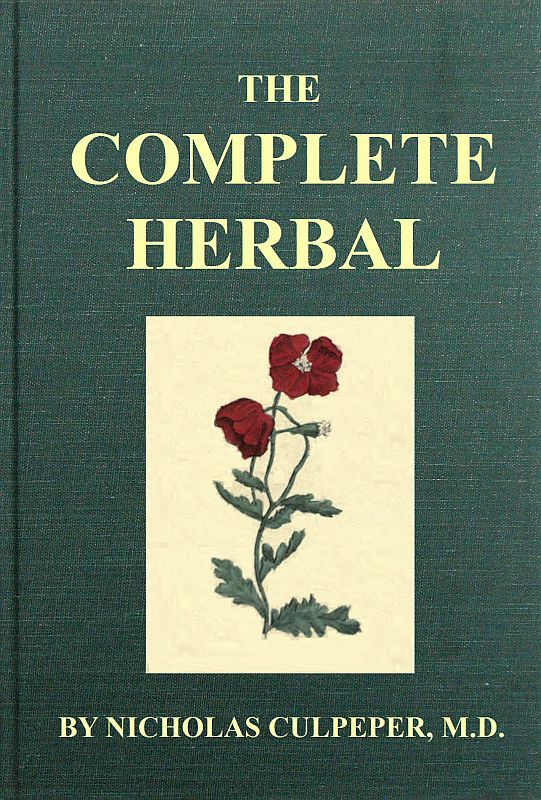
A CATALOGUE OF SIMPLES IN THE NEW DISPENSATORY.
Compact source patterns from the extracted citation set.
1 passage across 1 book; strongest source: Anatomy of Melancholy.
Matched as agrimony; high confidence.
1 passage across 1 book; strongest source: Extraordinary Popular Delusions.
Matched as agrimony; high confidence.
12 passages across 7 books; strongest source: Culpeper's Complete Herbal.
Matched as agrimony; high confidence.
Representative public passages with the herb mention highlighted and linked to archive source material.


Complete public source inventory, placed after the interpretive reading so the page opens with the most useful synthesis first.

Culpeper's Complete Herbal
Nicholas Culpeper | 1653

Demonology and Devil-lore
Moncure Daniel Conway | 1879

The Family Herbal
John Hill | 1755

Anatomy of Melancholy
Robert Burton | 1621

Illustration of the Occult Sciences
Ebenezer Sibly | 1784

Brewer's Dictionary of Phrase & Fable
E. Cobham Brewer | 1870

Extraordinary Popular Delusions
Charles Mackay | 1841

Three Books of Occult Philosophy
Heinrich Cornelius Agrippa von Nettesheim | 1533

Genethlialogia
John Gadbury | 1658

Clavis Astrologiae Elimata
Henry Coley | 1669