Medicine
highCulpeper classifies wormwood as cleansing and wind-expelling, placing it near beet, pellitory, garlic, dill, chamomile, fennel, and juniper.
A CATALOGUE OF SIMPLES IN THE NEW DISPENSATORY.
Artemisia absinthium
Wormwood appears in Hermetikon as an archive-backed plant entry, with references across historical medical, magical, symbolic, and ritual contexts where the source texts support them.
Identity, safety, and search aliases used to connect this herb to the archive.
Thujone-containing preparations raise neurotoxicity, seizure, and pregnancy concerns.
Historical archive citations are not medical advice. Use modern clinical and poison-control sources for ingestion, dosage, pregnancy, and toxicity questions.
Curated archive synthesis of recurring uses, recipes, rituals, and interpretive problems.
Hermetikon's curated reading of Wormwood (Artemisia absinthium) is built from 3 source-linked archive notes and 2 preparation or ritual-use entries. The strongest recurring contexts are medicine, ritual uses, and safety. Each note below links back to the archive source used for the claim.
Culpeper classifies wormwood as cleansing and wind-expelling, placing it near beet, pellitory, garlic, dill, chamomile, fennel, and juniper.
A CATALOGUE OF SIMPLES IN THE NEW DISPENSATORY.
Frazer records a smoke-charm in which holy oil, laurel leaves, and wormwood are thrown on coals to stupefy witches in the clouds.
§ 3. The Purificatory Theory of the Fire-festivals.
The archive has both plant and absinthe language for wormwood; the strongest Artemisia evidence is distinct from beverage references and plant preparations.
King's aromatic wine uses wormwood with lavender, origanum, peppermint, rosemary, and sage in stronger white wine.
Frazer records wormwood thrown with holy oil and laurel leaves on glowing charcoal so the smoke will stupefy witches.
§ 3. The Purificatory Theory of the Fire-festivals.
Compact source patterns from the extracted citation set.
3 passages across 3 books; strongest source: Encyclopaedia of Antiquities.
Matched as wormwood; high confidence.
11 passages across 11 books; strongest source: Balder the Beautiful, Volume I.
Matched as wormwood; high confidence.
1 passage across 1 book; strongest source: Anatomy of Melancholy.
Matched as wormwood; high confidence.
Representative public passages with the herb mention highlighted and linked to archive source material.


Complete public source inventory, placed after the interpretive reading so the page opens with the most useful synthesis first.

Culpeper's Complete Herbal
Nicholas Culpeper | 1653

Anatomy of Melancholy
Robert Burton | 1621

The Family Herbal
John Hill | 1755

King's American Dispensatory
Harvey Wickes Felter | 1854

Brewer's Dictionary of Phrase & Fable
E. Cobham Brewer | 1870

Encyclopaedia of Occultism
Lewis Spence | 1920

Malleus Maleficarum
Heinrich Kramer (Institoris) | 1487

Oedipus Aegyptiacus
Athanasius Kircher | 1652

Mystic London
Charles Maurice Davies | 1875

Student's Mythology
Catherine Ann White | 1873

The Golden Bough
James George Frazer | 1913

The Golden Bough
James George Frazer | 1890

Liber 777
Aleister Crowley | 1909

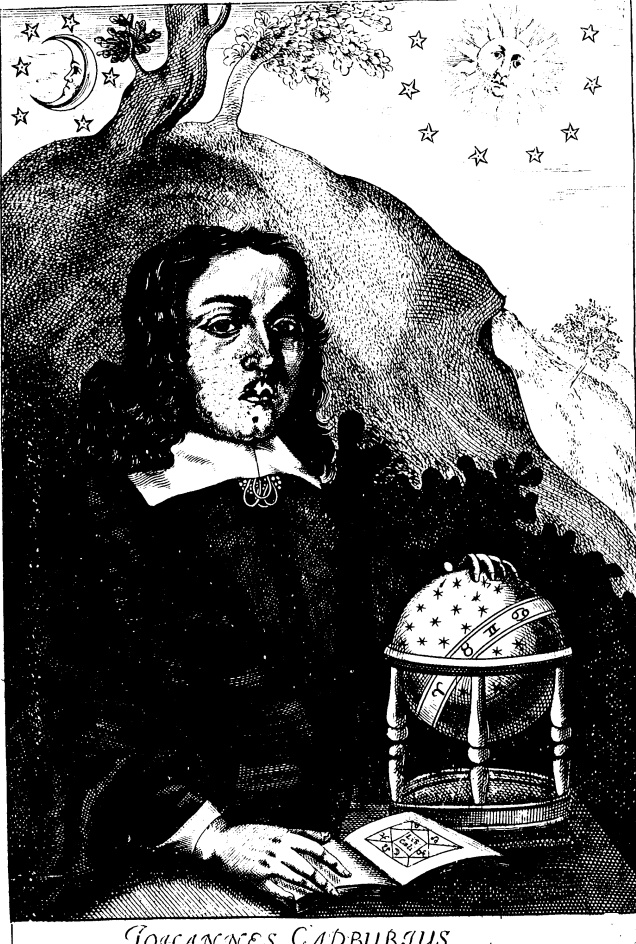
Genethlialogia
John Gadbury | 1658

Miscellanies
John Aubrey | 1696

Balder the Beautiful, Volume I
James George Frazer | 1913

Witchcraft, Magic & Alchemy
Grillot de Givry | 1929

Hastings' Encyclopaedia of Religion and Ethics
James Hastings | 1926

Magick in Theory and Practice
Aleister Crowley | 1929

Illustration of the Occult Sciences
Ebenezer Sibly | 1784

Salem Witchcraft
Various Historians | 1892

Encyclopaedia of Antiquities
Thomas Dudley Fosbroke | 1825

Extraordinary Popular Delusions
Charles Mackay | 1841

Transcendental Magic
Eliphas Levi | 1854

The Equinox Vol. 1 No. 4
Aleister Crowley | 1910

The Equinox Vol. 1 No. 8
Aleister Crowley | 1912