Astrology
highCulpeper calls garden rue the Herb of Grace and assigns it to the Sun under Leo, before listing urinary, menstrual, antidotal, and plague-time virtues.
Ruta graveolens
Rue appears in Hermetikon as an archive-backed plant entry, with references across historical medical, magical, symbolic, and ritual contexts where the source texts support them.
Identity, safety, and search aliases used to connect this herb to the archive.
Phototoxic and associated with poisoning and pregnancy risk in medicinal use.
Historical archive citations are not medical advice. Use modern clinical and poison-control sources for ingestion, dosage, pregnancy, and toxicity questions.
Curated archive synthesis of recurring uses, recipes, rituals, and interpretive problems.
Hermetikon's curated reading of Rue (Ruta graveolens) is built from 3 source-linked archive notes and 2 preparation or ritual-use entries. The strongest recurring contexts are folk magic, astrology, and safety. Each note below links back to the archive source used for the claim.
Culpeper calls garden rue the Herb of Grace and assigns it to the Sun under Leo, before listing urinary, menstrual, antidotal, and plague-time virtues.
Culpeper's Latin materia medica notes that rue is hot and dry, 'an enemy to generation,' and not suitable for pregnant women, while also praising it against poison.
HERBS AND THEIR LEAVES.
Lang explains rue's English name Herb of Grace through holy-water sprinkling and its older reputation as a charm against sprites and powers of evil.
THE EARLY HISTORY OF THE FAMILY.
Culpeper says rue leaves taken alone or with figs and walnuts were called Mithridate and used against dangerous medicines and deadly poisons.
Brewer explains Herb of Grace as rue used for sprinkling holy water, tying the plant to exorcism and Sunday ritual language.
Compact source patterns from the extracted citation set.
3 passages across 3 books; strongest source: Culpeper's Complete Herbal.
Matched as herb of grace; high confidence.
3 passages across 3 books; strongest source: Anatomy of Melancholy.
Matched as rue; high confidence.
8 passages across 7 books; strongest source: Brewer's Dictionary of Phrase & Fable.
Matched as herb of grace; high confidence.
Representative public passages with the herb mention highlighted and linked to archive source material.

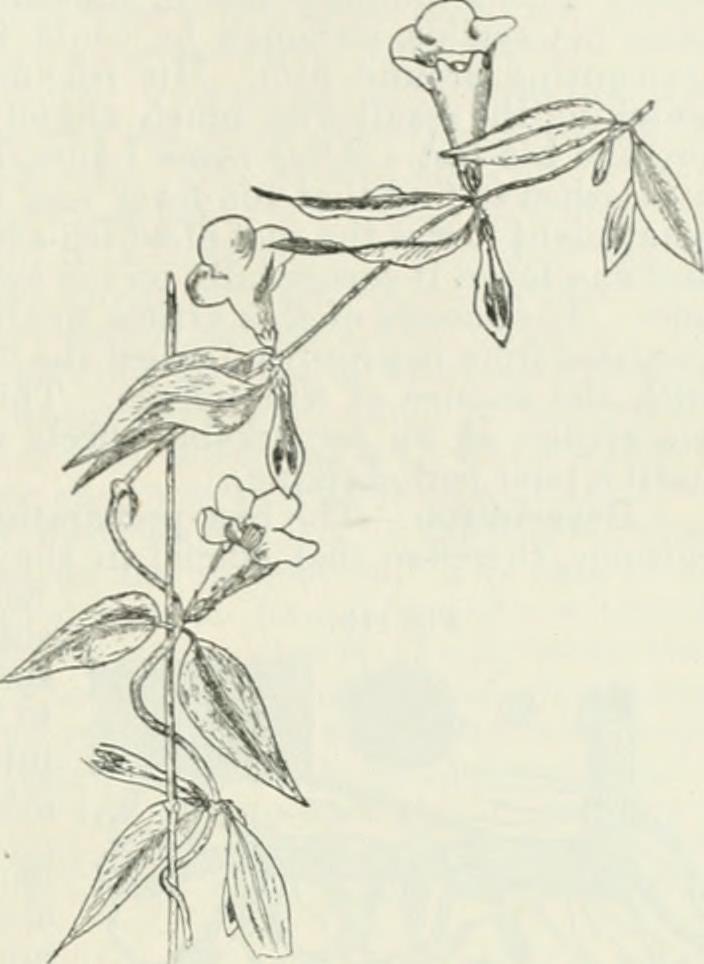


Complete public source inventory, placed after the interpretive reading so the page opens with the most useful synthesis first.
Culpeper's Complete Herbal
Nicholas Culpeper | 1653
Custom and Myth
Andrew Lang | 1884

Custom and Myth
Andrew Lang | 1884
Anatomy of Melancholy
Robert Burton | 1621
Brewer's Dictionary of Phrase & Fable
E. Cobham Brewer | 1870

Demonology and Devil-lore
Moncure Daniel Conway | 1879
King's American Dispensatory
Harvey Wickes Felter | 1854

Mysteries of All Nations
James Grant | 1880
Primitive Culture Vol 1
Edward B. Tylor | 1871
Hastings' Encyclopaedia of Religion and Ethics
James Hastings | 1926