Medicine
highHill gives a compact household medical claim for aniseed, saying a small quantity of bruised seed is excellent in colic and useful in indigestion and stomach complaints.
Pimpinella anisum
Anise appears in Hermetikon as an archive-backed plant entry, with references across historical medical, magical, symbolic, and ritual contexts where the source texts support them.
Identity, safety, and search aliases used to connect this herb to the archive.
Allergy, estrogenic effects, and interaction cautions are relevant for medicinal use.
Historical archive citations are not medical advice. Use modern clinical and poison-control sources for ingestion, dosage, pregnancy, and toxicity questions.
Curated archive synthesis of recurring uses, recipes, rituals, and interpretive problems.
Hermetikon's curated reading of Anise (Pimpinella anisum) is built from 3 source-linked archive notes and 2 preparation or ritual-use entries. The strongest recurring contexts are medicine, preparations, and folk magic. Each note below links back to the archive source used for the claim.
Hill gives a compact household medical claim for aniseed, saying a small quantity of bruised seed is excellent in colic and useful in indigestion and stomach complaints.
Spence records aniseed in horse-whispering lore, where the horse-charmer applies it to the animal's nose while charming or whispering.
Hill distinguishes oil of aniseed as a distilled oil with the virtues of aniseed and notes its taste and cold-weather behavior.
Hill describes a sweet distilled oil of aniseed and compares its virtues and taste with ordinary aniseed preparations.
Pow-Wows includes oil of aniseed in a treacle or honey paste for horses, alongside assafoetida, sulphur, cinnabar of antimony, and aurum mosaicum.
Compact source patterns from the extracted citation set.
3 passages across 3 books; strongest source: Demonologia.
Matched as aniseed; high confidence.
3 passages across 3 books; strongest source: Culpeper's Complete Herbal.
Matched as aniseed; high confidence.
6 passages across 5 books; strongest source: The Family Herbal.
Matched as aniseed; high confidence.
Representative public passages with the herb mention highlighted and linked to archive source material.
Complete public source inventory, placed after the interpretive reading so the page opens with the most useful synthesis first.
Anatomy of Melancholy
Robert Burton | 1621
The Family Herbal
John Hill | 1755
Encyclopaedia of Occultism
Lewis Spence | 1920
Salem Witchcraft
Various Historians | 1892
Popular Superstitions, and the Truths Contained Therein
Herbert Mayo | 1851
Pow-Wows
John George Hohman | 1820
Witch Stories
E. Lynn Linton | 1861
Thaumaturgia
Richard Harris Dalton Barham | 1835
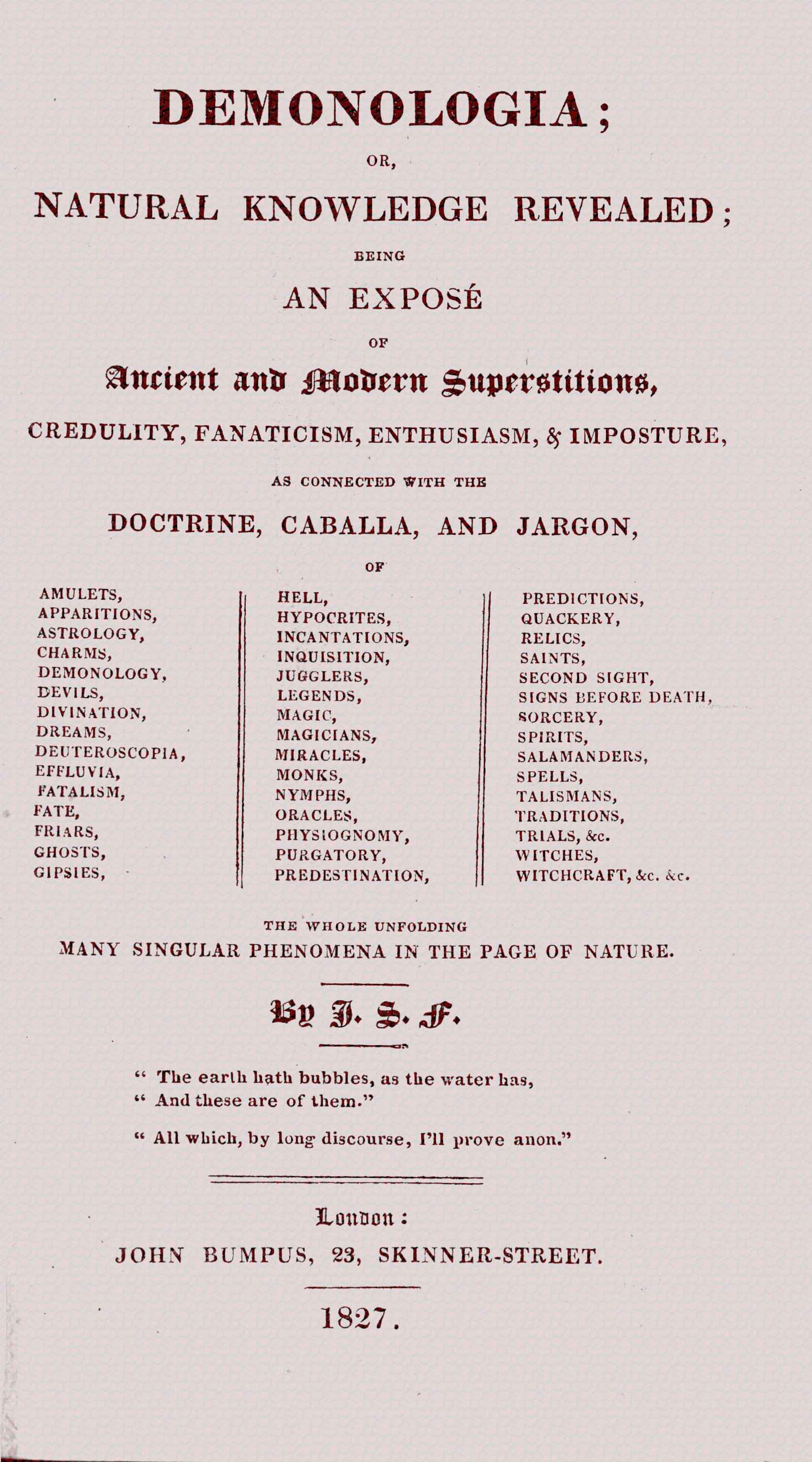
Demonologia
J. S. Forsyth | 1827
Culpeper's Complete Herbal
Nicholas Culpeper | 1653
The Influence of the Stars
Rosa Baughan | 1880