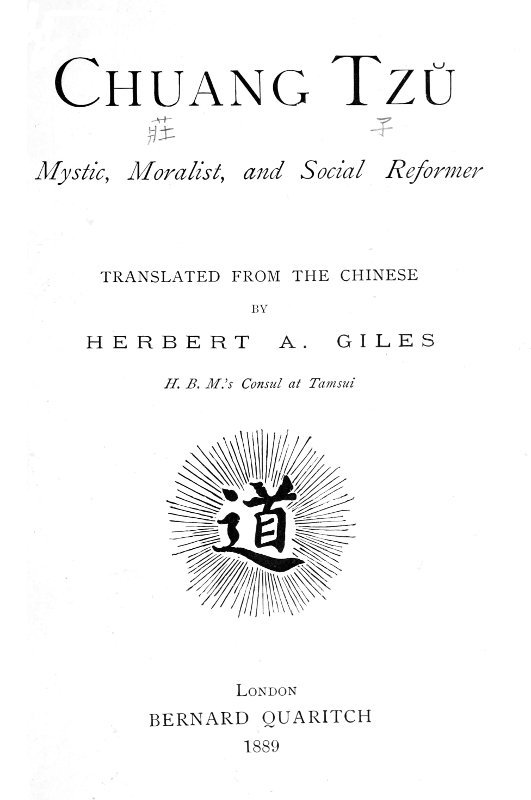
Classical Taoist philosophy and mysticism
Chuang Tzu: Mystical Works (Zhuangzi)
Foundational Taoist philosophical text attributed to Zhuangzi (ca. 4th century BCE). Collection of philosophical anecdotes, paradoxes, fables, and mystical teachings on the nature of Tao, spontaneous action, spiritual freedom, and transcendence. Uses whimsical stories, paradoxes, and philosophical dialogues to point beyond rational understanding toward direct mystical experience. Emphasizes wu-wei (non-action), ziran (spontaneity), and abandonment of artificial distinctions. More poetic and mystical than Tao Te Ching. Central to Taoist philosophy and profoundly influenced Chinese and later East Asian thought.
Archive Paths
Philosophy and Esoteric Cosmology
Philosophical and cosmological texts on mystical philosophy, Neoplatonism, moral philosophy, cosmic order, metaphysics, and symbolic cosmology.
Eastern Religion and Yoga
Eastern religion and yoga texts covering Hindu, Taoist, yogic, dharmic, and Asian philosophical works represented in the archive.
Contents43 chapters
- 01Chuang Tzŭ
- 02CONTENTS.
- 03Introduction.
- 04Note on the Philosophy of Chaps. i-vii.
- 05CHAPTER I.
- 06CHAPTER II.
- 07CHAPTER III.
- 08CHAPTER IV.
- 09CHAPTER V.
- 10CHAPTER VI.
- 11CHAPTER VII.
- 12CHAPTER VIII.
- 13CHAPTER IX.
- 14CHAPTER X.
- 15CHAPTER XI.
- 16CHAPTER XII.
- 17CHAPTER XIII.
- 18CHAPTER XIV.
- 19CHAPTER XV.
- 20CHAPTER XVI.
- 21CHAPTER XVII.
- 22CHAPTER XVIII.
- 23CHAPTER XIX.
- 24CHAPTER XX.
- 25CHAPTER XXI.
- 26CHAPTER XXII.
- 27CHAPTER XXIII.
- 28CHAPTER XXIV.
- 29CHAPTER XXV.
- 30CHAPTER XXVI.
- 31CHAPTER XXVII.
- 32CHAPTER XXVIII.
- 33CHAPTER XXIX.
- 34CHAPTER XXX.
- 35CHAPTER XXXI.
- 36CHAPTER XXXII.
- 37CHAPTER XXXIII.
- 38INDEX
- 39ERRATA AND ADDENDA
- 40FOOTNOTES:
- 41Transcriber's Notes:
- 42THE FULL PROJECT GUTENBERG LICENSE
- 43"Cover"
Contributors
From the Same Tradition

Readers Also Explore
Ask the Hermetikon Archivist about this text
Search within this book, retrieve direct quotations with page references, or explore related ideas.