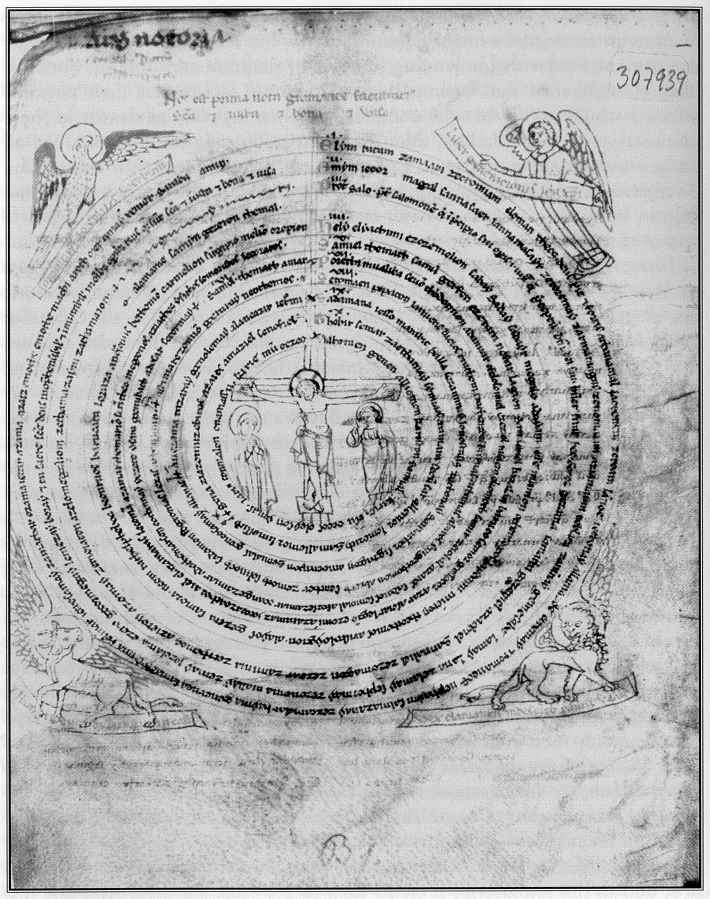
Ars Notoria: The Notory Art of Solomon
Medieval grimoire attributed to King Solomon containing prayers, orations, and mystical figures (notae) designed to enhance memory, learning, and wisdom. Unlike other grimoires focused on spirit conjuration, the Ars Notoria emphasizes divine grace obtained through prayer and contemplation of sacred symbols to acquire knowledge. It is the fifth book of the Lemegeton in some traditions.
Archive Paths
Grimoires and Ceremonial Magic
Primary grimoire and ceremonial magic texts covering the Key of Solomon, Goetia, pentacles, Abramelin, spirit catalogues, seals, consecrations, and ritual practice.
Solomonic Magic
Solomonic magic texts, grimoires, spirit catalogues, angelic operations, seals, conjurations, and ritual procedures attributed to Solomon.
Grimoire Tradition
Grimoire literature across manuscript and print traditions, including operations, spirits, talismans, prayers, seals, and practical magical procedures.
Contents99 chapters
- 01ARS NOTORIA
- 02The Notory Art revealed by the Most High Creator to Solomon.
- 03Here beginneth the first Treatise of this Art, which Master Apollonius calleth, The Golden Flowers , being the generall Introduction to all the Natural Sciences; and this is Confirmed, Composed, and Approved by the Authority of Solomon, Manichaeus, and Euduchaeus.
- 04Of what Efficacy Words are.
- 05An Explanation of the Notary Art.
- 06The first Precept.
- 07A Spiritual Mandate of the precedent Oration.
- 08The Oration is , Theos Megthe, in tu yma Eurel, &cet..
- 09The Exposition of this Oration.
- 10The words of these Orations cannot wholly be Expounded.
- 11Of the Triumphal Figures, how Sparingly they are to be pronounced, and honestly and devoutly Spoken.
- 12The Expositions of the Lunations of the Notary Art.
- 13He sheweth how the precedent Oration is the Beginning and Foundation of the whole Art.
- 14The Oration .
- 15Of the Efficacy of that Oration which is inexplicable to human sense.
- 16Here he Sheweth, in what manner these Notes differ in Art, and the Reason thereof; for a Note is a certain knowledge, by the Oration and Figure before set down.
- 17The Oration .
- 18How the Oration is to be said in the beginning of every Moneth, chastly, and with a pure minde.
- 19Here followeth the Prayer we spake of before, to obtain a good Memory.
- 20Here following is the Prologue of the precedent Oration, which provoketh and procureth Memory, and is continued with the precedent Note.
- 21Here beginneth the Prologue of this Oration.
- 22Here he sheweth some other Vertue of the precedent Oration.
- 23Here followeth an Oration of great Vertue, to attain the knowledge of the Physical Art, having also many other Vertues and Efficacy.
- 24The Oration of the Physical Art.
- 25Another Part of the Same Oration.
- 26Here follows an efficacious Preface of an Oration, shewing what Vertue and Efficacy you may thereby prove every day.
- 27Here he sheweth how every Note of every Art ought to exercise his own office; and that the Notes of one Art profit not to the knowledge of another Art, and we are to know, that all Figures have their proper Orations.
- 28A certain Special Precept.
- 29The Oration .
- 30The beginning of the Oration.
- 31Here is also a particular Exposition of the fore-going Oration, which he hath left unexpounded to be read by everyone that is learned in this Art, and know, that no humane power nor faculty in man is sufficient to finde out the Exposition thereof.
- 32The first of these Orations which we call Spiritual, the virtue where of teacheth Divinity, and preserveth the memory thereof.
- 33The Election of time, in what Lunation these Orations ought to be said.
- 34Here followeth the beginning of this Oration, wherein is so great Virtue and efficacy, as we have said, it being said with great devotion.
- 35This is the beginning of the second part of that Oration spoken of before, which is of great virtue.
- 36Having said this third part of the Oration, then meditate with thy self about the Scriptures thou desirest to know; and then say this Oration.
- 37Then the parts being commemorated as is directed, add also the following Oration.
- 38How the Latine Orations are not expounded by the words of the Orations.
- 39Here he speaketh of the efficacy of all these.
- 40In this Chapter he sheweth the efficacy of the subsequent Oration, it being special to obtain Eloquence.
- 41In this Chapter he setteth down the time and manner how this Oration is to be pronounced.
- 42No Man that is impedited or corrupted with any crime ought to presume to say this Oration.
- 43This is a Prologue or Exposition of the precedent Oration, which ought to be said together.
- 44How every several Art hath its proper note. [1]
- 45Of the Liberal Sciences and other things, which may be had by that Art.
- 46Of the Liberal Sciences and other things which may be had thereby.
- 47He declareth what Notes the three first Liberal Arts have.
- 48Here Solomon sheweth how the Angel told him distinctly, wherefore the Grammar hath three Figures.
- 49The Reason why the Dialectical Art hath two Figures onely.
- 50The Reason why Rhetorick hath four Figures.
- 51At what times and hours the Notes of these three Liberal Arts are to be looked into.
- 52How the Grammatical Notes are to be looked into in the first Moon.
- 53Here followeth the knowledge of the Notes.
- 54Of the Logical Notes.
- 55How the Logical Notes are to be inspected, and the Orations thereof said.
- 56How we must beware of offences.
- 57How the Notes ought to be inspected, at certain elected times.
- 58How diverse Months are to be sought out in the inspection of the Notes.
- 59Here is made mention of the Notes of all Arts.
- 60Definitions of several Arts, and the Notes thereof.
- 61The first Oration at the beginning of the Note.
- 62Three Chapters to be published, before any of the Notes.
- 63How the Proper Notes are to be inspected.
- 64What days are to be observed in the inspection of the Notes of the four Arts.
- 65Of the inspection of general Notes.
- 66How the three first Chapters are to be pronounced before Orations.
- 67How the fifth Oration of Theology ought to be rehearsed upon these Orations.
- 68How these Orations are to be said every day once before the general Note, and the Notes of the liberal Arts.
- 69The 7 Oration, which is the end of the Orations, belonging to the ineffable Note, the last of Theology, having 24 Angels.
- 70Special precepts of the Notes of Theology, chiefly of the 1. 2. and 3.
- 71How Solomon received that ineffable Note from the Angel.
- 72How the Precepts are to be observed in the operation of all Arts.
- 73These Precepts are specially to be observed.
- 74For Eloquence and stability of mind.
- 75To Comfort the outward and inward Senses.
- 76This following is for the Memory.
- 77This following strengtheneth the interior and exterior Senses.
- 78This following giveth Eloquence, Memory and Stability.
- 79An Oration to recover lost wisdome.
- 80To obtain the grace of the Holy Spirit.
- 81To recover intellectual wisdome.
- 82Hereby is increased so much Eloquence that nothing is above it.
- 83The third part, the sign Lemach.
- 84For the Memory.
- 85The Conclusion of the whole work, and of the Science obtained.
- 86The Benediction of the place.
- 87To perform any work.
- 88Some other precepts to be observed in this work.
- 89The processe follows.
- 90Other precepts.
- 91Then silently say these Orations.
- 92The manner of Consecrating the Figure of Memory.
- 93Four days the Figure of Memory ought to be consecrated with these Orations.
- 94The Oration following ought to be said as you stand up.
- 95The following Oration hath power to expell all Lusts.
- 96- Here endeth the Ars Notoria -
- 97Foreword
- 98THE
- 99
Contributors
Influences & Sources
Works Influenced by This
By the Same Author
From the Same Tradition
Readers Also Explore
Ask the Hermetikon Archivist about this text
Search within this book, retrieve direct quotations with page references, or explore related ideas.