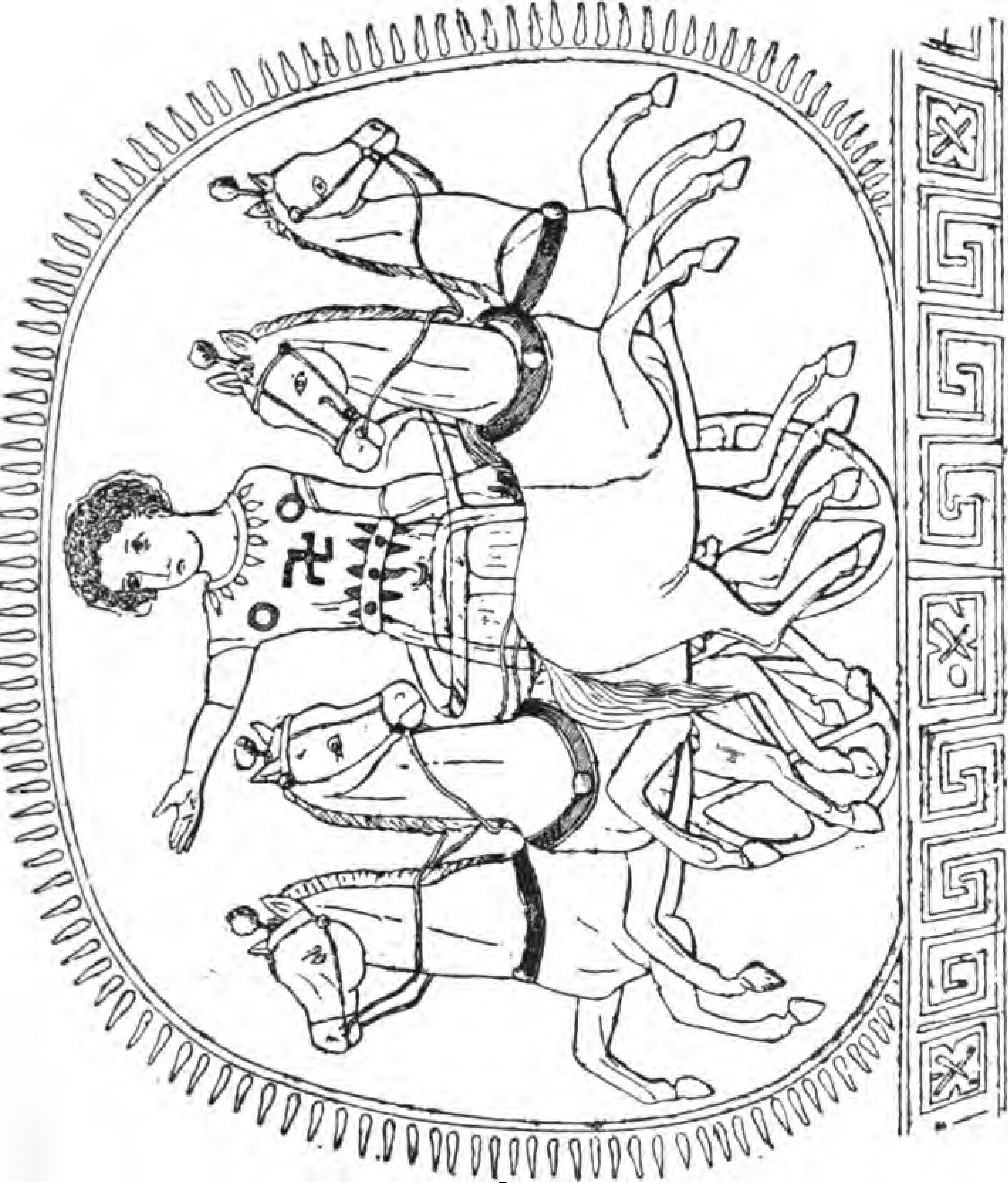
Freemasonry, comparative religion, and symbolism
The Migration of Symbols
A fundamental work in the history of symbology and comparative religion. Count Goblet d'Alviella investigates how religious and magical symbols (such as the Swastika, the Winged Globe, and the Caduceus) traveled and transformed across different cultures and eras. He argues that symbols are often more enduring than the dogmas that created them, providing a 'genealogy' of icons that link ancient Mesopotamia, Egypt, India, and the Western world.
Archive Paths
Comparative Religion
Comparative religion texts on ritual, myth, sacrifice, belief, ancient religion, and cross-cultural theories of sacred practice.
Comparative Mythology
Comparative mythology texts on gods, hero cycles, symbolic patterns, classical myth, Indo-European myth, and cross-cultural mythic structures.
Folklore Studies
Folklore studies texts on folk tales, fairy belief, superstition, regional customs, oral tradition, and the collection of vernacular belief.
Anthropology of Religion
Anthropological texts on ritual, animism, totemism, taboo, early religion, culture, and theories of belief formation.
Contents6 chapters
- 01CHAPTER I. ON SYMBOLS COMMON TO DIFFERENT RACES
- 02CHAPTER II. ON THE GAMMADION OR SWASTIKA
- 03CHAPTER III. ON THE CAUSES OF ALTERATION IN THE MEANING AND FORM OF SYMBOLS
- 04CHAPTER IV. SYMBOLISM AND MYTHOLOGY OF THE TREE
- 05CHAPTER V. ON THE TRANSMUTATION OF SYMBOLS
- 06CHAPTER VI. THE WINGED GLOBE, THE CADUCEUS, AND THE TRISULA
Contributors
Readers Also Explore
Ask the Hermetikon Archivist about this text
Search within this book, retrieve direct quotations with page references, or explore related ideas.