ermetikon

Curated archive path

Gnostic and Apocryphal Texts Reading List

This reading list moves from apocryphal and Enochic material into Gnostic scripture and scholarship, giving readers a structured path through hidden revelation, ascent, and cosmological myth.

This public reading list links directly to source books in the Hermetikon archive, then back into the broader archive path for related texts, authors, and traditions.

Texts
5
Path
Use this path if you want Gnostic and apocryphal source material grouped by archive use rather than by a single modern doctrinal category.
The Book of Enoch

Step 1: Start with Enochic apocrypha

The Book of Enoch

R. H. Charles (Translator)200 BCEPrimaryAdvanced

The Book of Enoch gives an apocryphal foundation for angelic descent, judgment, watchers, and visionary ascent.

An ancient Jewish religious work, traditionally attributed to Enoch, the great-grandfather of Noah. The book is fundamental to the study of early Judeo-Christian angelology and demonology, famously detailing the fall of the Watchers (Angels) who descended to Earth and sired the Nephilim. It describes Enoch's journeys through the heavens and the underworld, the nature of the celestial order, and the final judgment. It is a cornerstone for the study of the Enochian magical tradition (Dee, Crowley).
Pistis Sophia

Step 2: Read a major Gnostic source

Pistis Sophia

G.R.S. Mead1921PrimaryAdvanced

Pistis Sophia is a central source for Gnostic cosmology, repentance, emanations, and post-resurrection teaching.

A major Gnostic scripture of the early Christian era, presenting dialogues between the risen Jesus and his disciples — most prominently Mary Magdalene — concerning the cosmic drama of Pistis Sophia, a divine emanation (aeon) who falls from the Pleroma, repents, and is redeemed. G.R.S. Mead's 1921 translation provides the most accessible English version of this complex Coptic manuscript. The text is an indispensable source for understanding Gnostic theology, including its unique cosmology of light-worlds and rulers, the mechanics of spiritual redemption, and the elevated role of the feminine divine.

Pistis Sophia

Step 3: Compare another Pistis Sophia edition

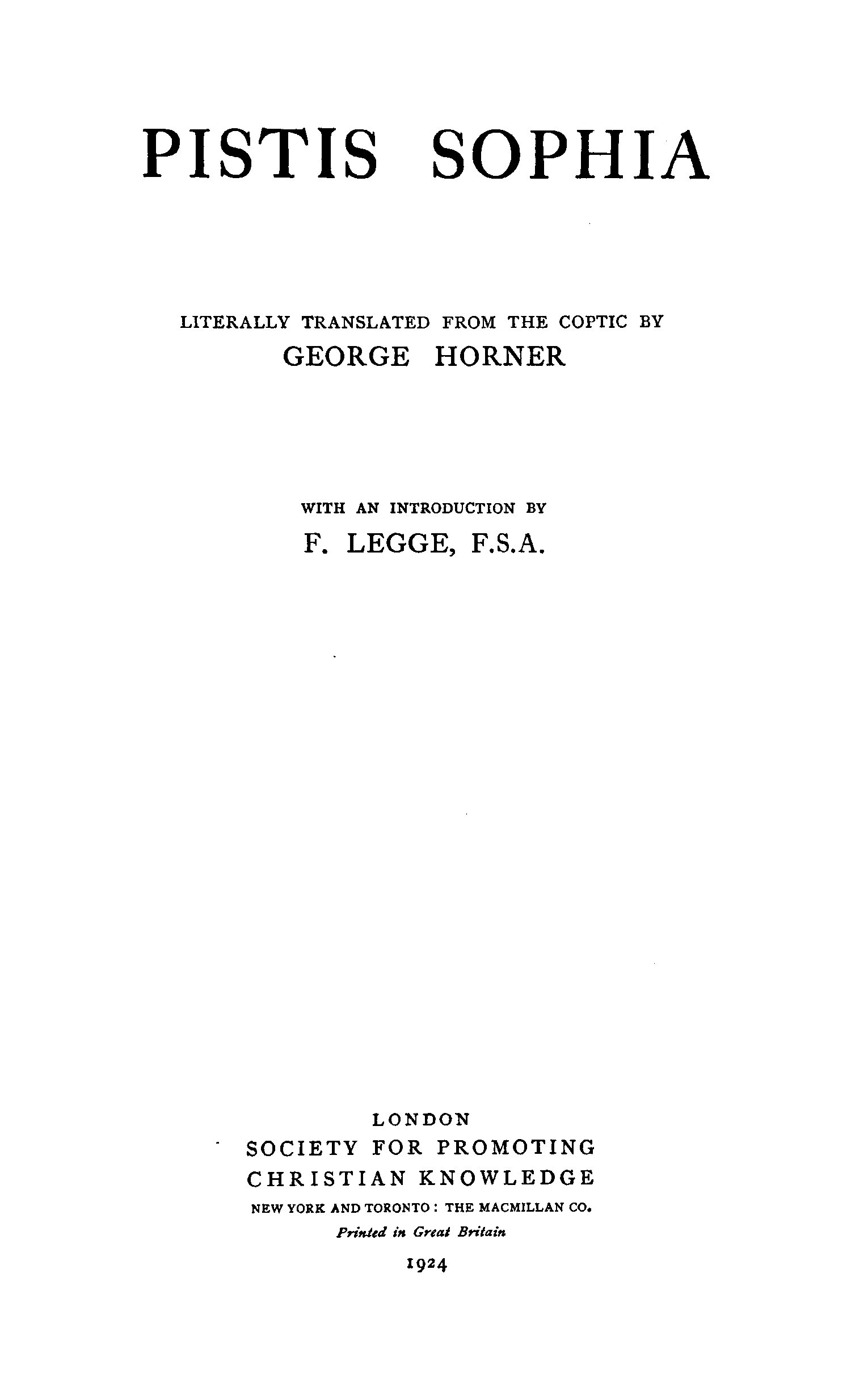
Pistis Sophia

G. Horner (Translator) and Francis Legge (Introduction)1924PrimaryAdvanced

A second Pistis Sophia edition helps readers compare translation, editorial framing, and source presentation.

A foundational Gnostic text containing the supposed teachings of the transfigured Jesus to the assembled disciples.

The Nag Hammadi Library

Step 4: Move into Nag Hammadi material

The Nag Hammadi Library

Various Gnostic Authors (Ancient)1945PrimaryAdvanced

The Nag Hammadi Library broadens the reading path into a wider body of Gnostic scriptures and related texts.

Collection of Gnostic and early Christian texts discovered in 1945 near Nag Hammadi, Egypt. Contains gospels, apocalyptic texts, mystical treatises, and liturgical materials representing diverse Gnostic communities and teachings. Provides primary source access to Gnostic cosmology, soteriology, and spirituality suppressed by orthodox Christianity. Reveals alternative Christian traditions emphasizing hidden knowledge and divine sparks within matter.

Fragments of a Faith Forgotten

Step 5: Add historical synthesis

Fragments of a Faith Forgotten

G.R.S. Mead1900Advanced

Fragments of a Faith Forgotten gives a historical and interpretive frame for Gnostic movements and early Christian origins.

A comprehensive scholarly survey of the Gnostic movements of the early Christian centuries, widely regarded as one of the finest introductions to Gnosticism in the English language. Mead systematically examines the major Gnostic schools — Valentinians, Basilidians, Ophites, Sethians, and others — drawing on Patristic sources and surviving Gnostic texts. He traces the connections between Gnosticism, the Hermetic literature, Neo-Pythagoreanism, and Eastern mysticism, presenting Gnosticism as a sophisticated attempt to synthesise the spiritual wisdom of the ancient world. An essential scholarly companion to the Pistis Sophia and Corpus Hermeticum.

Gnostic & Apocrypha FAQ

Public answers for readers choosing whether this source path fits their study.

What should I read first for Gnostic texts?

Start with the Book of Enoch for apocryphal background, then move into Pistis Sophia and the Nag Hammadi material.

Is Pistis Sophia in the Hermetikon archive?

Yes. Hermetikon includes multiple Pistis Sophia entries, which makes it useful for comparing editions and translation framing.

Why include the Book of Enoch with Gnostic texts?

The Book of Enoch is apocryphal rather than simply Gnostic, but it shares important themes of revelation, angels, ascent, judgment, and hidden knowledge.

Research this path with the Archivist

Search across the listed texts, retrieve citations, and compare related terms across the archive.

Ask the Archivist