Preparation
mediumCulpeper uses mace as an aromatic spice in a compound paste or troche with gentian, tormentil, orris, zedoary, cinnamon, cloves, angelica, coriander, roses, citron peel, liquorice, and hippocras.
Myristica fragrans
Mace appears in Hermetikon as an archive-backed plant entry, with references across historical medical, magical, symbolic, and ritual contexts where the source texts support them.
Identity, safety, and search aliases used to connect this herb to the archive.
Mace shares nutmeg-family cautions; high doses are unsafe.
Historical archive citations are not medical advice. Use modern clinical and poison-control sources for ingestion, dosage, pregnancy, and toxicity questions.
Curated archive synthesis of recurring uses, recipes, rituals, and interpretive problems.
Hermetikon's curated reading of Mace (Myristica fragrans) is built from 3 source-linked archive notes and 1 preparation or ritual-use entry. The strongest recurring contexts are preparations, ritual uses, and identity. Each note below links back to the archive source used for the claim.
Culpeper uses mace as an aromatic spice in a compound paste or troche with gentian, tormentil, orris, zedoary, cinnamon, cloves, angelica, coriander, roses, citron peel, liquorice, and hippocras.
Spence preserves a Mercury-hour spirit-conversation rite in which the chafing dish is perfumed with aloe-wood or mace, benzoin, or storax.
Some mace archive hits are not the spice: Frazer's Cilician god carries a mace or truncheon, making those passages symbolic weapon evidence rather than Myristica fragrans evidence.
§ 9. The Burning of Cilician Gods.
Spence uses mace as a possible perfume for a chafing-dish fumigation in a Mercury-hour spirit-conversation rite.
Compact source patterns from the extracted citation set.
5 passages across 5 books; strongest source: Hermetic and Alchemical Writings of Paracelsus.
Matched as mace; medium confidence.
4 passages across 4 books; strongest source: Brewer's Dictionary of Phrase & Fable.
Matched as mace; medium confidence.
3 passages across 3 books; strongest source: Culpeper's Complete Herbal.
Matched as mace; medium confidence.
1 passage across 1 book; strongest source: The Golden Bough.
Matched as mace; medium confidence.
2 passages across 2 books; strongest source: Book of Black Magic.
Matched as mace; medium confidence.
Representative public passages with the herb mention highlighted and linked to archive source material.
Complete public source inventory, placed after the interpretive reading so the page opens with the most useful synthesis first.
Culpeper's Complete Herbal
Nicholas Culpeper | 1653
Encyclopaedia of Occultism
Lewis Spence | 1920
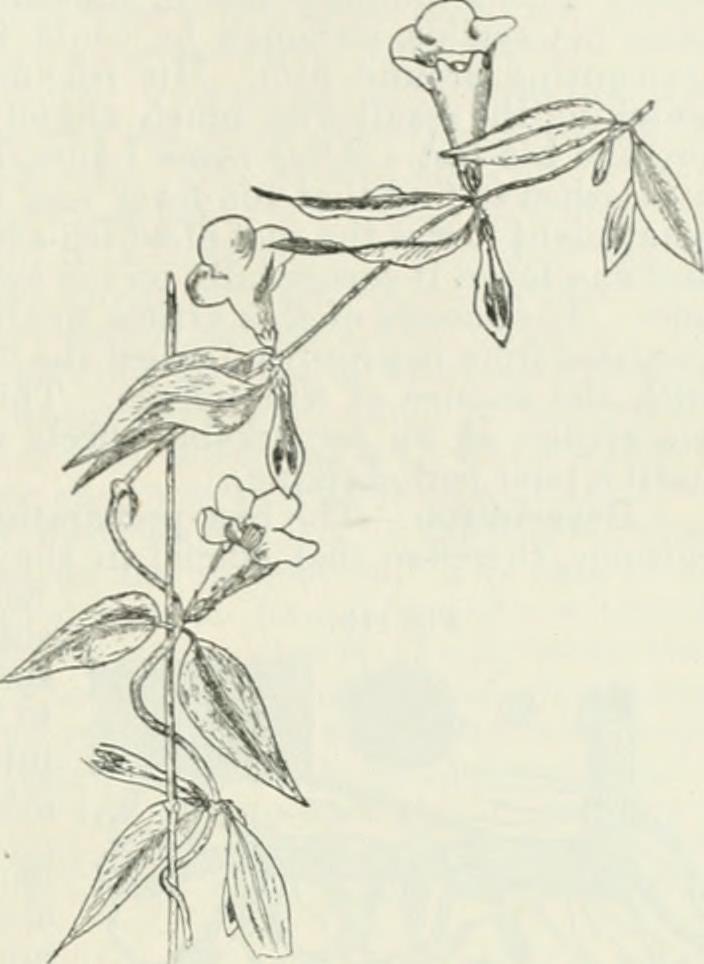
King's American Dispensatory
Harvey Wickes Felter | 1854
The Family Herbal
John Hill | 1755
Transcendental Magic
Eliphas Levi | 1854
The Secret Doctrine, Vol. 3
Helena Petrovna Blavatsky | 1897
The Influence of the Stars
Rosa Baughan | 1880
Chips from a German Workshop (Vol 1)
F. Max Müller | 1867
Primitive Culture, Vol. 2
Edward Burnett Tylor | 1871
The Magus (Vol 1)
Francis Barrett | 1801
Star Names
Richard Hinckley Allen | 1899
The Golden Bough
James George Frazer | 1907
Brewer's Dictionary of Phrase & Fable
E. Cobham Brewer | 1870
Book of Black Magic
Arthur Edward Waite | 1898

The Triumphant Chariot of Antimony
Basil Valentine | 1604
The Mathnawi
R. A. Nicholson | 1925
Hermetic and Alchemical Writings of Paracelsus
Philippus Aureolus Theophrastus Bombast von Hohenheim (Paracelsus) | 1493
Magick in Theory and Practice
Aleister Crowley | 1929
The Evil Eye
Frederick Thomas Elworthy | 1895
The Secret Doctrine (Vol 1)
H. P. Blavatsky | 1888