Preparation
highKing's gives tincture of calendula, explicitly synonymized with tincture of marigold, as calendula powder macerated and percolated with alcohol.
Calendula officinalis
Calendula / Marigold appears in Hermetikon as an archive-backed plant entry, with references across historical medical, magical, symbolic, and ritual contexts where the source texts support them.
Identity, safety, and search aliases used to connect this herb to the archive.
Asteraceae allergy and pregnancy caution are relevant for medicinal use.
Historical archive citations are not medical advice. Use modern clinical and poison-control sources for ingestion, dosage, pregnancy, and toxicity questions.
Curated archive synthesis of recurring uses, recipes, rituals, and interpretive problems.
Hermetikon's curated reading of Calendula / Marigold (Calendula officinalis) is built from 3 source-linked archive notes and 2 preparation or ritual-use entries. The strongest recurring contexts are preparations, ritual uses, and astrology. Each note below links back to the archive source used for the claim.
King's gives tincture of calendula, explicitly synonymized with tincture of marigold, as calendula powder macerated and percolated with alcohol.
Agrippa assigns marigold to the Sun in a planetary plant list, giving calendula-marigold a clear occult correspondence when the historical name is marigold.
Frazer records marigold garlands among the late flowers twined around tombstones on All Souls' Eve, a death-ritual context rather than a remedy.
§ 6. Readjustment of Egyptian Festivals.
King's prepares tincture of calendula, also called tincture of marigold, from calendula powder and alcohol by maceration and percolation.
Frazer records marigold flowers twined into grave garlands on All Souls' Eve with other late-season blooms.
§ 6. Readjustment of Egyptian Festivals.
Compact source patterns from the extracted citation set.
1 passage across 1 book; strongest source: The Family Herbal.
Matched as marigold; high confidence.
7 passages across 7 books; strongest source: Anatomy of Melancholy.
Matched as marigold; high confidence.
2 passages across 2 books; strongest source: The Golden Bough.
Matched as marigold; high confidence.
3 passages across 3 books; strongest source: King's American Dispensatory.
Matched as calendula; high confidence.
1 passage across 1 book; strongest source: Culpeper's Complete Herbal.
Matched as marigolds; high confidence.
Representative public passages with the herb mention highlighted and linked to archive source material.
Complete public source inventory, placed after the interpretive reading so the page opens with the most useful synthesis first.
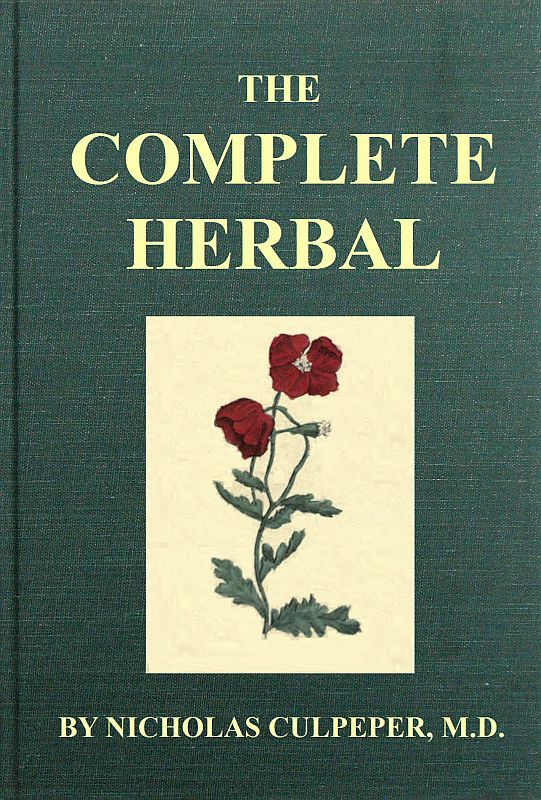
Culpeper's Complete Herbal
Nicholas Culpeper | 1653
King's American Dispensatory
Harvey Wickes Felter | 1854
The Family Herbal
John Hill | 1755
The Golden Bough
James George Frazer | 1906
Three Books of Occult Philosophy
Heinrich Cornelius Agrippa von Nettesheim | 1533
The Golden Bough
James George Frazer | 1890
Ten Thousand Dreams Interpreted
Gustavus Hindman Miller | 1901
Anatomy of Melancholy
Robert Burton | 1621
Brewer's Dictionary of Phrase & Fable
E. Cobham Brewer | 1870
The Golden Bough
James George Frazer | 1911
The Golden Bough
James George Frazer | 1906
The Golden Bough
James George Frazer | 1913
The Golden Bough
James George Frazer | 1912
Strange Survivals
Sabine Baring-Gould | 1892
The Complete Book of Fortune
Anonymous | 1930
Psychic Self-Defense
Dion Fortune (Violet Mary Firth) | 1930
Liber 777
Aleister Crowley | 1909
The Magus (Vol 1)
Francis Barrett | 1801
The Influence of the Stars
Rosa Baughan | 1880
Illustration of the Occult Sciences
Ebenezer Sibly | 1784
Signs, Omens and Superstitions
George Lyman Kittredge | 1915