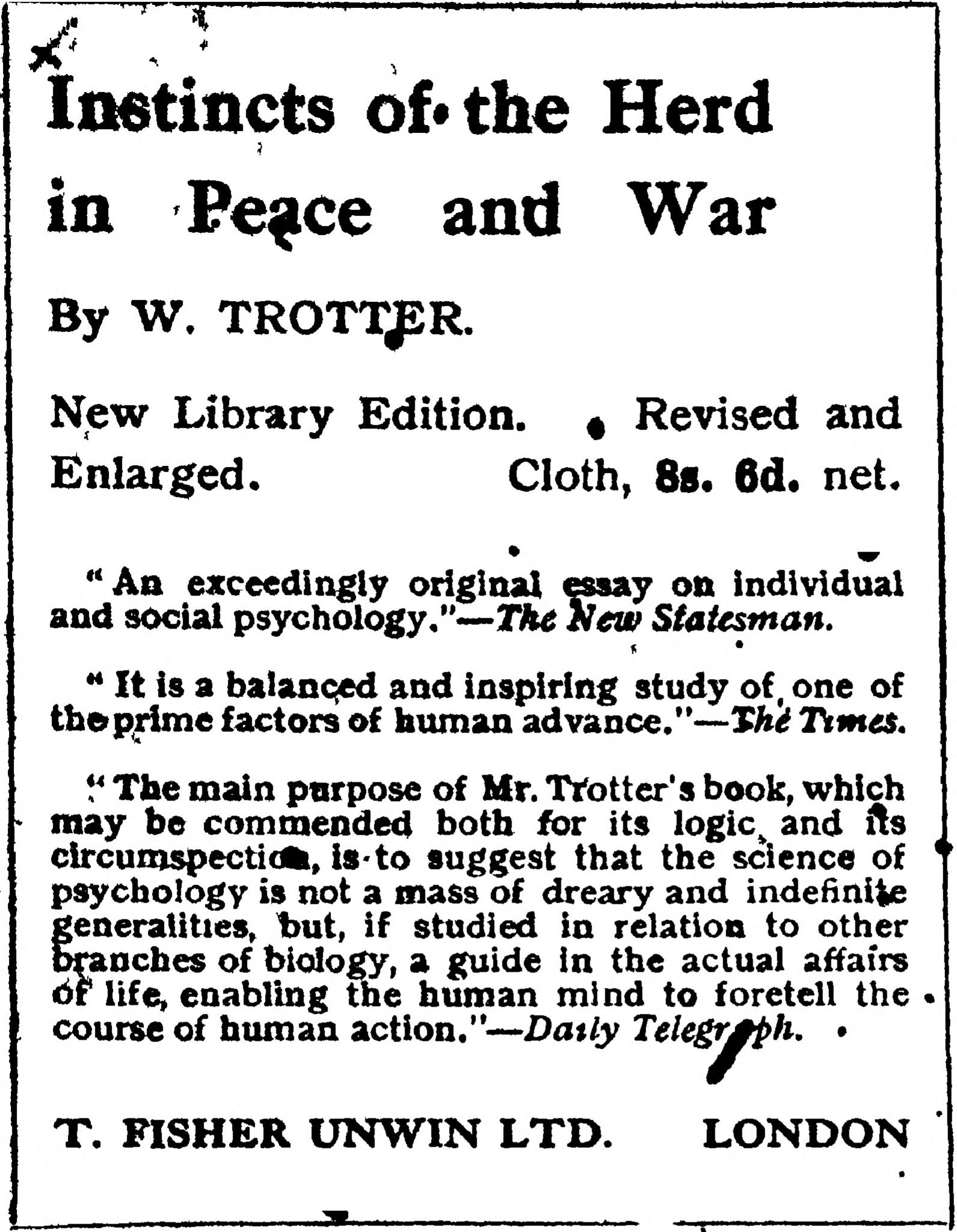
Social psychology and crowd theory
The Crowd: A Study of the Popular Mind
Gustave Le Bon1895
Intermediatecomplete
The seminal work of social psychology that founded the study of crowd behavior. Le Bon argues that an individual in a crowd loses their personal identity and critical faculty, becoming governed by a 'collective mind' that is impulsive, irrational, and susceptible to suggestion. He explores how leaders (preachers, demagogues, and magi) use prestige, affirmation, and repetition to command the masses. It is included here for its profound analysis of religious and fanatical belief as a form of mass psychology.
Also known asPsychologie des Foules
This edition1896
EditionT. Fisher Unwin, London (First English Translation)
Mob PsychologyElectoral CrowdsIndividual vs. Collective ResponsibilityLeaders of CrowdsCollective Mind & Mental UnityPrestigeMass Suggestion (as secular magic)Manipulation of mass sentimentPsychoanalysisSocial PsychologyMass SuggestionComparative ReligionOratory and RhetoricFunctionalismSocial Psychology / Crowd TheoryModern Psychology / Psychical Research
Archive Paths
Contents17 chapters
- 01Introduction
- 02Book I: The Mind of Crowds
- 03General Characteristics of Crowds
- 04The Sentiments and Morality of Crowds
- 05The Ideas, Reasoning and Imagination of Crowds
- 06A Religious Shape Assumed by All Convictions of Crowds
- 07Book II: Opinions and Beliefs of Crowds
- 08Remote Factors of Opinions and Beliefs
- 09Immediate Factors of Opinions of Crowds
- 10The Leaders of Crowds and Their Means of Persuasion
- 11Limitations of Variability of Beliefs and Opinions
- 12Book III: Classification and Description of Different Crowds
- 13Classification of Crowds
- 14Criminal Crowds
- 15Criminal Juries
- 16Electoral Crowds
- 17Parliamentary Assemblies
By the Same Author
Readers Also Explore
Ask the Hermetikon Archivist about this text
Search within this book, retrieve direct quotations with page references, or explore related ideas.